carchidi.solutions Contact

Project · Estimating System

A modern estimating and workflow platform, built from scratch.

Where The Answer proves I can run a decade-old production floor, this is the newer discipline: a from-scratch FileMaker system for a commercial print shop's request-for-quote and estimating workflow, built with current FileMaker architecture patterns and AI-assisted development tooling from day one.

Platform
FileMaker Pro + FileMaker Data API
Customer
First commercial print shop customer
Status
In active development

What it is

Most print shops still run estimating out of one person's head, a stack of spreadsheets, and handwritten notes on a job jacket. This system captures that knowledge instead — the pricing logic, the rules of thumb, the "we always do it this way for this customer" exceptions — as a real, editable workflow. An RFQ comes in, an estimator builds a quote against real components and real markups, and the quote converts into a job the way this specific shop already works.

It's built against this shop's actual quotes, actual press specs, and actual pricing exceptions — not a generic spec sheet. A full named case study is coming once the system is live in daily use and the customer is ready to be shown publicly; for now the screenshots below have customer and job details replaced with placeholders.

The system in use

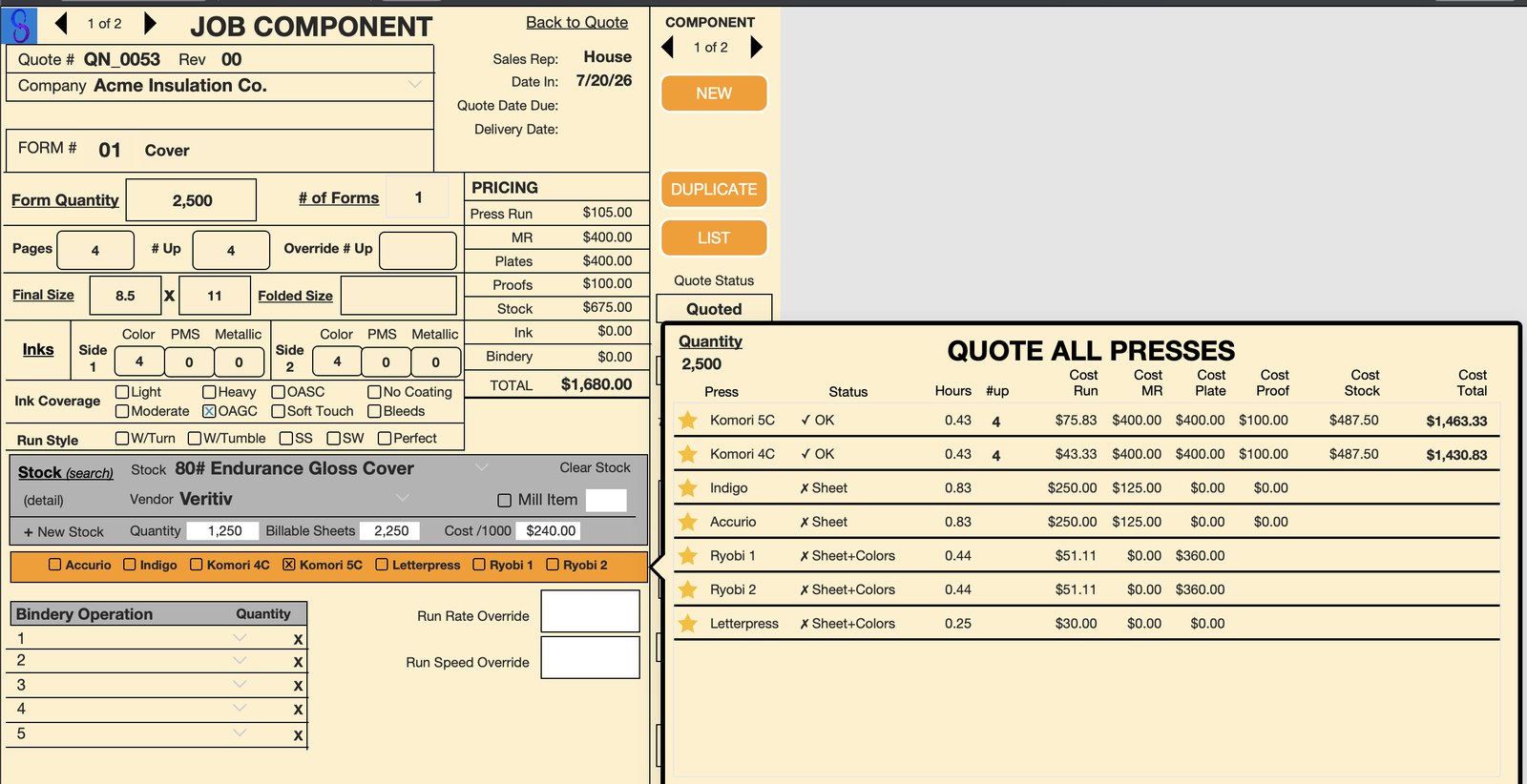
Estimating engine comparing cost across every available press in real time
Comparing cost across every press option, live, while building a quote.
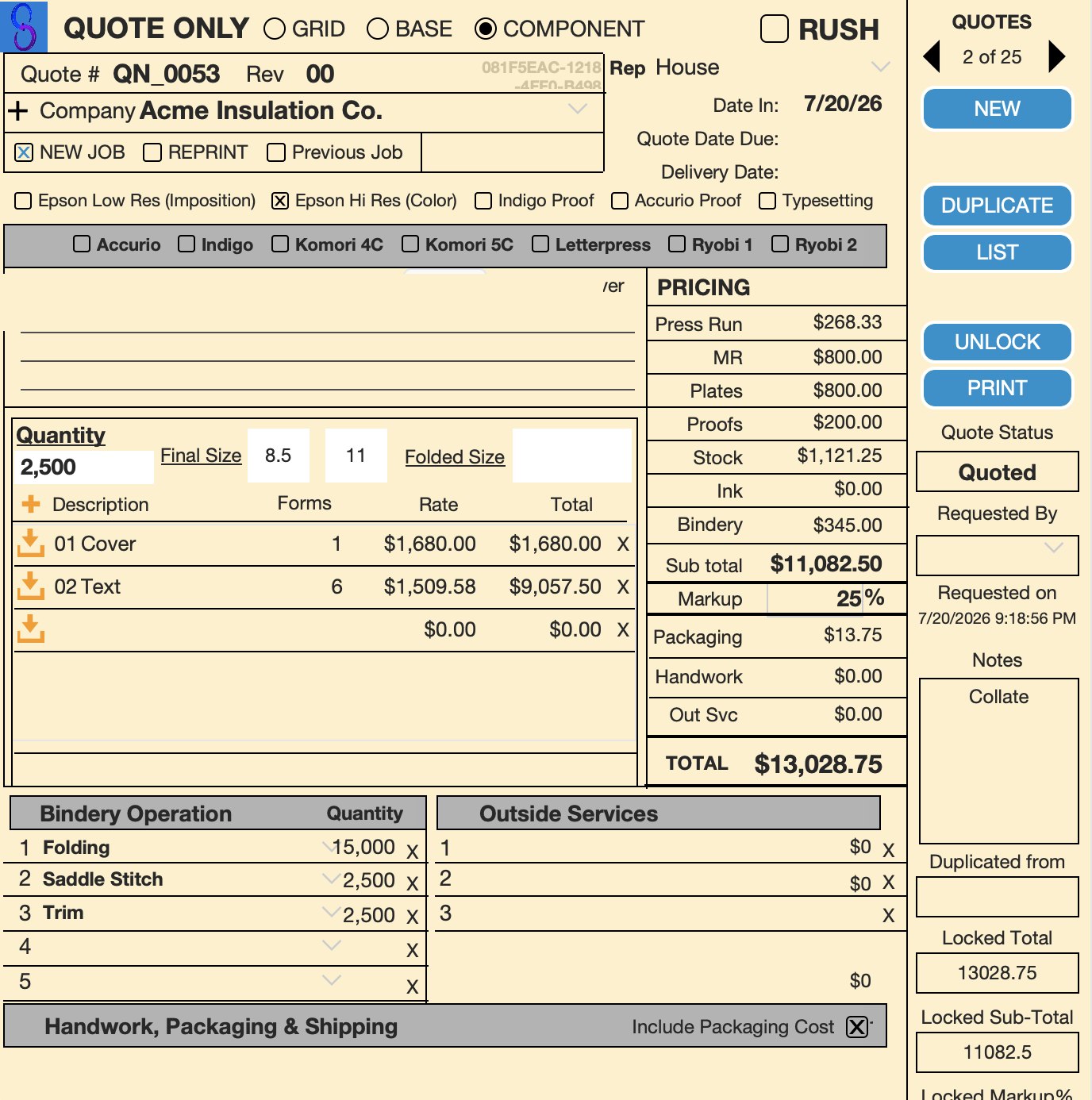
A full quote with pricing breakdown, markup, and bindery operations
A complete quote — stock, bindery, markup, and total, ready to convert to a job.
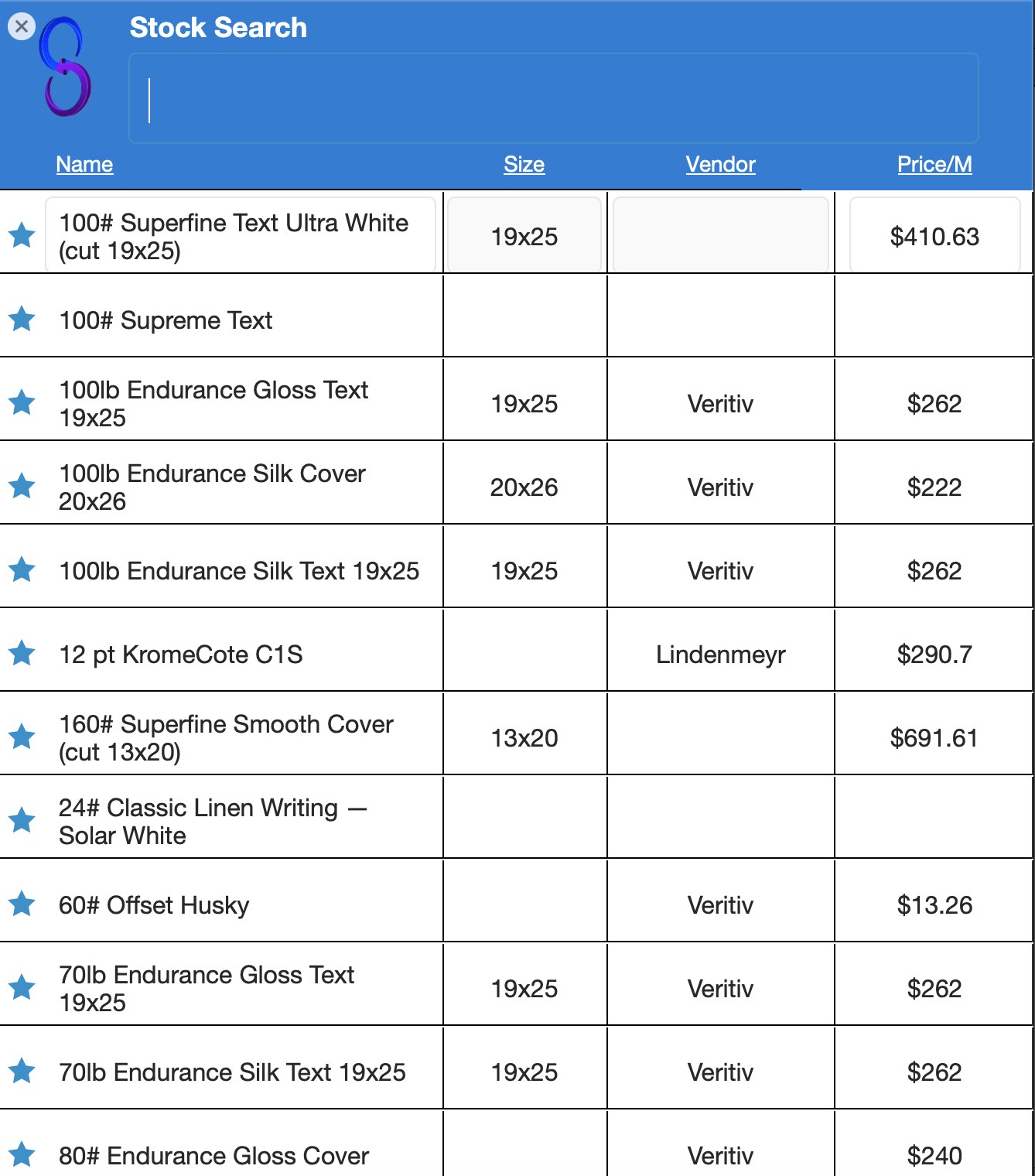
Searchable stock library with vendor and pricing detail
An active stock library estimators search directly from the quote.
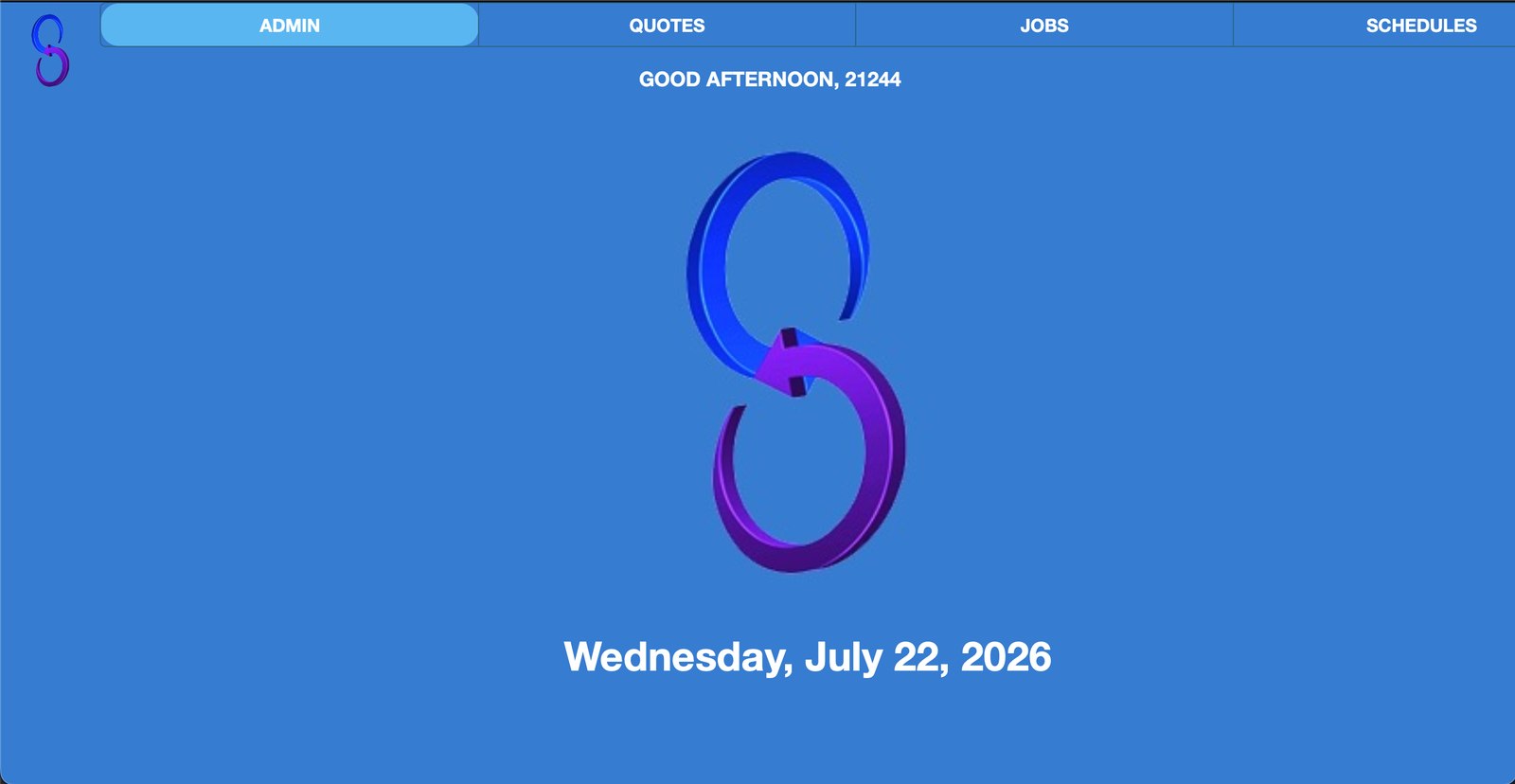
The system's daily home screen
The everyday starting point for the team — quotes, jobs, and schedules, one tap away.

Details worth a developer's attention

  • Centralized brand-asset architecture. Every logo on every layout — nearly 70 of them — resolves through a single global-key relationship to one resource record, so a rebrand is a one-field change instead of a 70-layout hunt.
  • Editable business rules, not hardcoded logic. Pricing thresholds, per-color rates, and press routing logic live in an editable rules table the shop owner can tune himself — not values buried in a calculation only I can change.
  • AI-assisted development from day one. Schema introspection, relationship-graph mapping, and Data API work were done with AI-assisted tooling throughout the build — the same discipline as the GP Custom Services case study, applied from the ground up instead of retrofitted onto legacy code.
  • Data-safe demoing. Real customer records are never exposed for a public screenshot — values are captured, swapped for placeholders, and restored exactly, so the shop's actual customer list stays private even while the system is shown off.

More work

See where this is headed, or the decade-old system it stands next to.